Opening, late summer during the Dreyfus Affair
The Guermantes Reception
The [First-person narrator](entity:character-recall-character-36db7d2b7eb1) recalls that before attending a reception at the [Hôtel de Guermantes](entity:location-recall-location-h-tel-de-guermantes-a24b103135e3), he had kept watch for the household’s return and witnessed an encounter that changed his understanding of [Palamède de Charlus](entity:character-recall-character-palam-de-de-charlus-a65d1fbf89c6). In the courtyard, the Baron and Jupien recognized and attracted one another with an apparently instinctive exchange of glances and gestures.
The encounter unfolds like a natural ritual: the Baron follows Jupien, returns with him to the tailor’s shop, and eventually becomes his patron. The First-person narrator’s botanical comparison between flower and insect helps him grasp how chance and desire bring these men together, while also introducing the book’s inquiry into hidden sexual lives.
Immediately after the courtyard encounter
The Baron Revealed
From his hiding place, the [First-person narrator](entity:character-recall-character-36db7d2b7eb1) overhears [Palamède de Charlus](entity:character-recall-character-palam-de-de-charlus-a65d1fbf89c6) speaking frankly to Jupien about his desires, his pursuit of young men, and the different forms of satisfaction he seeks. The Baron’s words turn what had seemed an incomprehensible performance into a legible aspect of his character.
The First-person narrator then generalizes from the revelation, considering the concealment, isolation, social codes, and involuntary recognition shared by men like Charlus. His account also sorts sexual lives into different patterns, though he later recognizes that his early theory is incomplete. The episode establishes the novel’s central tension between private identity and public disguise.
Later that afternoon, before the reception
The Orchid and Its Insect
Reflecting on Jupien and [Palamède de Charlus](entity:character-recall-character-palam-de-de-charlus-a65d1fbf89c6), the [First-person narrator](entity:character-recall-character-36db7d2b7eb1) compares their meeting with the specialized mechanisms by which flowers attract the insects needed for pollination. Jupien’s attraction to an older man appears to him an unlikely but fitting conjunction, shaped by an obscure correspondence between particular desires.
He sees the analogy as a way of thinking about the rare conditions under which love becomes possible. The comparison gives the encounter an aesthetic and almost providential dignity, even as the narrator acknowledges that the botanical image is not scientific proof of anything about human sexuality.
That evening, after nine o’clock
The Reception Begins
The [First-person narrator](entity:character-recall-character-36db7d2b7eb1) arrives outside the Princesse de Guermantes’s reception unsure whether he has been invited. He watches the Princess receive guests with polished indifference and sees the usher recognize [Duc de Châtellerault](entity:character-recall-character-f9564da11502), whose earlier encounter with the usher had been secret and sexually charged.
When the usher announces the narrator loudly, the Princess rises to greet him, relieving his fear that he has entered uninvited. Her ceremonious welcome, however, quickly ends: she directs him toward the Prince rather than beginning a conversation. The scene introduces the social rituals and anxieties that govern the evening.
Early in the reception
Seeking an Introduction
The [First-person narrator](entity:character-recall-character-36db7d2b7eb1) tries to find someone who will introduce him to the Prince. [Palamède de Charlus](entity:character-recall-character-palam-de-de-charlus-a65d1fbf89c6) is too angry at the narrator’s apparent disregard for his claim to control entry into Guermantes houses, while Mme de Souvré and [Mme d’Arpajon](entity:character-recall-character-6da5d231d3bf) evade his request.
[M. de Bréauté](entity:character-recall-character-bbeb6cc6cbf2) eventually presents him to the Prince, whose reserved manner proves more genuinely natural than the Duke’s familiar style. [The narrator](entity:character-recall-character-the-narrator-4884f56df089)’s progress through the room exposes the cowardice, calculation, and unspoken hierarchies behind polite society.
During the reception, before the main dinner
The Prince Takes Swann Aside
The [First-person narrator](entity:character-recall-character-36db7d2b7eb1) sees the Prince de Guermantes take [Charles Swann](entity:character-recall-character-charles-swann-745e250aaed3) away from the reception, apparently to confront him over his support for [Alfred Dreyfus](entity:character-recall-character-078c763cc8f1). [The narrator](entity:character-recall-character-the-narrator-4884f56df089) later hears competing accounts of what happened, reflecting how quickly social gatherings generate and circulate false explanations.
The episode anticipates Swann’s account of the conversation: the Prince has privately changed sides after confronting evidence of injustice in the trial. His political conversion will not erase the social cost of [Dreyfusism](entity:concept-recall-concept-dreyfusism-590c1268a60a), especially in an aristocratic circle increasingly shaped by antisemitism.
During the reception
Charlus and Vaugoubert
The [First-person narrator](entity:character-recall-character-36db7d2b7eb1) observes [Palamède de Charlus](entity:character-recall-character-palam-de-de-charlus-a65d1fbf89c6) and [M. de Vaugoubert](entity:character-recall-character-9dd670181285) recognize one another’s shared tendencies, while M. de Charlus identifies and comments on the sexual inclinations of young diplomatic officials. Vaugoubert, long restrained by ambition and fear, has lost some of the perceptiveness that Charlus displays.
Their exchange links private desire to diplomatic institutions and public performance. [Mme de Vaugoubert](entity:character-recall-character-1be7d9c37d6e)’s masculine manner also prompts the narrator to reflect on how couples can acquire one another’s traits, whether through temperament, imitation, or the need to live with an unfulfilled relationship.
Later in the reception, before midnight
Swann’s Political Confession
[Charles Swann](entity:character-recall-character-charles-swann-745e250aaed3) tells the [First-person narrator](entity:character-recall-character-36db7d2b7eb1) that the Prince de Guermantes has privately acknowledged the possibility that [Alfred Dreyfus](entity:character-recall-character-078c763cc8f1) was innocent and that the trial was compromised. The Prince describes his gradual change of mind, his distress about the Army, and his wife’s separate, earlier conviction.
Swann is moved by the Prince’s honesty but still refuses to endorse an anti-militarist campaign or attach his name to a petition. He wants Dreyfus cleared and [Georges Picquart](entity:character-recall-character-ff1d1795fb28) vindicated while retaining his own patriotic identity. His illness and his political awakening have brought him into closer solidarity with fellow Jews, even as his old social world turns against him.
Later that evening
Swann’s Failing Health
The [First-person narrator](entity:character-recall-character-36db7d2b7eb1) sees how severely illness has altered [Charles Swann](entity:character-recall-character-charles-swann-745e250aaed3)’s face and body. Swann speaks of his past loves and explains that recollections of his private life have become precious as death approaches; he is distressed at the thought of leaving them behind.
Swann admits that jealousy once shaped his experience of love, though he has rarely understood or controlled it. He urges the narrator to visit [Gilberte Swann](entity:character-recall-character-a4fa5a7a80de), whose name no longer arouses the old love in him. His decline brings the novel’s themes of memory, desire, and mortality into a single conversation.
Near midnight at the reception
The Guermantes Dinner Invitation
The [Duc de Guermantes](entity:character-recall-character-duc-de-guermantes-de9826949d92) invites the [First-person narrator](entity:character-recall-character-36db7d2b7eb1) to stay for supper with a small group, but the narrator declines because he expects [Albertine](entity:character-recall-character-albertine-6f859e563b53) to visit him after the theatre. He recognizes that people may sacrifice one pleasure for another, and that the choice can conceal the force of a new desire.
Before leaving, he learns that the Princesse de Guermantes is in love with [Palamède de Charlus](entity:character-recall-character-palam-de-de-charlus-a65d1fbf89c6). A letter addressed to the Baron, accidentally exposed when the Princess asks the narrator to post it, confirms the attachment that her earlier remarks had only hinted at.
During and after the reception
The Duchess’s Social Performance
The [First-person narrator](entity:character-recall-character-36db7d2b7eb1) studies [Oriane de Guermantes](entity:character-recall-character-2fb514fbf3f9) as she moves through the reception, greeting some guests warmly and ignoring others. Her ease and wit are inseparable from a keen sense of rank, while her gestures of friendliness comfort those beneath her without truly abolishing their inferiority.
[The narrator](entity:character-recall-character-the-narrator-4884f56df089) recalls learning how to interpret aristocratic affability, including a later occasion when he makes an elaborate bow rather than approach the Duchess. In society, tact means understanding the limits of apparent kindness and knowing when not to take it literally.
That night, after the reception
Albertine Fails to Arrive
Returning home, the [First-person narrator](entity:character-recall-character-36db7d2b7eb1) learns that [Albertine](entity:character-recall-character-albertine-6f859e563b53) has not yet arrived. He waits beside the telephone, watches the strip of darkness beyond the door, and becomes increasingly anxious as the evening passes.
Albertine finally calls from somewhere in Paris and initially seems reluctant to come. [The narrator](entity:character-recall-character-the-narrator-4884f56df089) presses her until she agrees to take a cab. Her voice, mixed with street sounds, makes him imagine the unknown life she has been living away from him and begins a pattern of suspicion and dependence.
Late that night
Albertine’s Late Visit
[Albertine](entity:character-recall-character-albertine-6f859e563b53) arrives after spending time elsewhere, and [Françoise](entity:character-recall-character-fran-oise-d26e2c6492c7) reports that she was dismissive about keeping the narrator waiting. [The narrator](entity:character-recall-character-the-narrator-4884f56df089) pretends to be indifferent, then begins kissing her rather than questioning her about the evening.
Albertine admires the turquoise-inlaid book cover that the narrator gives her, once a keepsake from [Gilberte](entity:character-recall-character-gilberte-f8e40d3b764f). The gift passes from one love to another, showing how objects retain or lose emotional value according to the changing self that invests them.
First night of the narrator’s second stay at Balbec
The Grandmother Returns
At [Balbec](entity:location-recall-location-balbec-d6d66fecba26), the [First-person narrator](entity:character-recall-character-36db7d2b7eb1) bends to remove his boots and suddenly recovers, through involuntary memory, the living image of his grandmother as she had been on their earlier arrival. The memory makes him understand at last that she is dead, a fact his mind had known but his feelings had not fully grasped.
He recalls the pain he caused her and the tenderness he once took for granted. The rediscovered presence of his grandmother is inseparable from the knowledge of her permanent absence, giving the narrator’s grief a new and devastating reality.
The night after the involuntary memory
Dreams of the Dead
In sleep, the [First-person narrator](entity:character-recall-character-36db7d2b7eb1) dreams that he is trying to find his grandmother, who is alive but frail and isolated. He fears that he has neglected her, searches for her address, and asks his father to lead him to her.
On waking, the dream’s logic dissolves, but its sorrow remains. [The narrator](entity:character-recall-character-the-narrator-4884f56df089) reflects that sleep creates an alternate life whose time and memories do not obey the waking world, and that the self who awakens may be unable to recover what the sleeping self experienced.
The day after the narrator’s return to Balbec
The Mother Arrives at Balbec
The [First-person narrator](entity:character-recall-character-36db7d2b7eb1)’s mother arrives in deep mourning. Seeing her in black and carrying her mother’s sunshade, he recognizes that she has begun to resemble the grandmother she has lost, as if the dead continue their lives through the living.
The two share memories, books, and rituals associated with the grandmother. [The narrator](entity:character-recall-character-the-narrator-4884f56df089) begins to understand the magnitude of his mother’s grief, while recognizing that his own sudden grief, though intense, is not the same as the lasting bereavement that has shaped her.
During the narrator’s early days back at Balbec
Françoise’s Account
[Françoise](entity:character-recall-character-fran-oise-d26e2c6492c7) describes how the narrator’s grandmother hid the seriousness of her illness, arranged for Saint-Loup to photograph her, and tried to spare her family distress. The [Balbec Grand Hotel manager](entity:character-recall-character-a8048cdbb83a) then reveals that she suffered repeated fainting spells that she had concealed from the narrator.
These disclosures revise the narrator’s memory of his grandmother’s final days. Her cheerful manner had masked pain and fear, while his own behavior had sometimes made her work even harder to protect him from the truth.
Several days after the narrator’s arrival at Balbec
Albertine’s Return
The [Balbec Grand Hotel manager](entity:character-recall-character-a8048cdbb83a) tells the [First-person narrator](entity:character-recall-character-36db7d2b7eb1) that [Albertine](entity:character-recall-character-albertine-6f859e563b53) is staying nearby and has asked to see him. Although grief initially makes him want solitude, he eventually agrees to meet her and resumes their outings.
Albertine’s presence restores some pleasure to the narrator’s life, but she also becomes a focus for suspicions he has not yet learned to interpret. Their renewed intimacy begins in the shadow of his grandmother’s death and will increasingly be shaped by jealousy.
Early in the Balbec season
Cottard’s Warning
At the casino in [Incarville](entity:location-recall-location-d81f6ed712b7), the [First-person narrator](entity:character-recall-character-36db7d2b7eb1) sees [Albertine](entity:character-recall-character-albertine-6f859e563b53) and Andrée dancing closely together. [Cottard](entity:character-recall-character-cottard-3da2a3d9d828) comments that their bodies are touching and suggests that the contact could excite them.
The remark transforms an otherwise ordinary dance into a source of suspicion. [The narrator](entity:character-recall-character-the-narrator-4884f56df089) leaves with Cottard, but Albertine’s laugh and apparent intimacy with Andrée stay with him, planting the idea that Albertine may desire women.
Soon after Cottard’s remark
Albertine Misses an Appointment
The lift-boy fails to find [Albertine](entity:character-recall-character-albertine-6f859e563b53) when the [First-person narrator](entity:character-recall-character-36db7d2b7eb1) sends him to fetch her. Albertine later explains that she returned too late to receive the message, and the narrator finds himself relieved by the certainty that she will not come that night.
The reprieve does not last. Her absence makes him imagine the pleasures and companions she may have preferred, and the next day her letter renews his desire to know what she is doing when they are apart.
During the early Balbec season
Albertine’s Contradictory Plans
[Albertine](entity:character-recall-character-albertine-6f859e563b53) gives several reasons for leaving the narrator to visit a woman at [Infreville](entity:location-recall-location-fc620c490ee1) and meet other girls. When he offers to accompany her, she changes her proposed destination and eventually abandons the outing altogether.
The [First-person narrator](entity:character-recall-character-36db7d2b7eb1) suspects that she has concealed another appointment, but he does not want to begin the exhausting work of surveillance. Their conversation leaves him with a more troubling sense that Albertine’s life runs on hidden paths beyond his control.
Later in the Balbec season
The Casino Encounter
At the casino, the [First-person narrator](entity:character-recall-character-36db7d2b7eb1) sees [Albertine](entity:character-recall-character-albertine-6f859e563b53) turn her attention toward [Bloch](entity:character-recall-character-bloch-d646f99aa2a1)’s cousin, who is involved with a retired actress. Albertine denies having looked at the women, but a mirror shows that she had been watching them.
The incident deepens the narrator’s mistrust. Albertine’s denial appears less reassuring than the evidence of her gaze, and the narrator begins reading ordinary gestures as signs of a concealed sexual life.
During the Balbec season, after the narrator’s suspicions begin
The Cambremers Visit
The [Marquise de Cambremer](entity:character-recall-character-marquise-de-cambrem-5d34b8bc6b65) visits the hotel and invites the [First-person narrator](entity:character-recall-character-36db7d2b7eb1) to Féterne. Her daughter-in-law treats him warmly because he is a friend of Saint-Loup, while displaying social ambition and a refined but unstable artistic taste.
Their conversation ranges across place names, painting, and music. The contrast between the elder Marquise’s generosity and the younger woman’s snobbery reveals how taste and manners serve as instruments of social belonging.
During the summer at Balbec
The Bloch Sisters’ Scandal
[Bloch](entity:character-recall-character-bloch-d646f99aa2a1)’s sister and a retired actress make their relationship conspicuous in the hotel, ultimately displaying their caresses in the ballroom. The protest of visiting officers cannot secure the women’s removal because [M. Nissim Bernard](entity:character-recall-character-m-nissim-bernard-992e231f121c)’s protection and influence complicate the manager’s response.
The public scene intensifies the narrator’s fear that [Albertine](entity:character-recall-character-albertine-6f859e563b53) may be attracted to women. He cannot tell whether the women’s behavior is being staged for an audience that includes Albertine, and his uncertainty turns the scandal into a personal threat.
As the Balbec season grows busier
The Girls on the Beach
The [First-person narrator](entity:character-recall-character-36db7d2b7eb1) watches women exchange glances and signals at the beach and casino, including a striking stranger whose attention seems directed at [Albertine](entity:character-recall-character-albertine-6f859e563b53). He also observes Albertine’s public coolness toward women, which seems to him potentially deliberate concealment.
Every small movement becomes evidence that can support either innocence or guilt. [The narrator](entity:character-recall-character-the-narrator-4884f56df089)’s jealousy feeds on this ambiguity, and his suspicions expand from Andrée to a wider, uncertain network of possible lovers.
After the first direct confrontation about Andrée
Albertine Reassures the Narrator
The [First-person narrator](entity:character-recall-character-36db7d2b7eb1) tells [Albertine](entity:character-recall-character-albertine-6f859e563b53) that he loves Andrée and claims that he is no longer in love with her. He then asks Albertine to help relieve his imagined suffering by explaining the rumors about her relationships with women.
Albertine denies the accusations and says that she and Andrée are repelled by such conduct. Her affection and apparent forgiveness soothe the narrator, and she gives him a more intimate caress than before. He recognizes that this moment of happiness may be no more than a rare coincidence of desire and kindness.
During the second Balbec visit
The Narrator and Saint-Loup
The [First-person narrator](entity:character-recall-character-36db7d2b7eb1) takes [Albertine](entity:character-recall-character-albertine-6f859e563b53) to Doncières to meet Saint-Loup. Albertine gives Robert conspicuous attention, and the narrator fears that she desires him, though Saint-Loup behaves with restraint.
The encounter revises the narrator’s view of both of them. He understands that his former impression of Saint-Loup’s pride was mistaken, but Albertine’s flirtation revives jealousy and makes him anxious about what she may want from other people.
At Doncières, during the same visit
Charlus Meets Morel
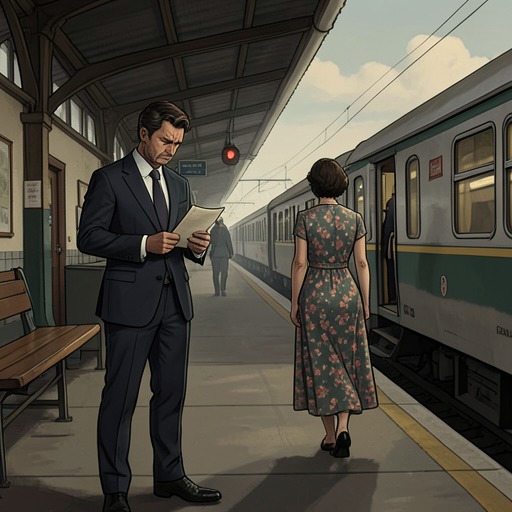
On the station platform, [Palamède de Charlus](entity:character-recall-character-palam-de-de-charlus-a65d1fbf89c6) asks the [First-person narrator](entity:character-recall-character-36db7d2b7eb1) to summon a bandsman. The bandsman proves to be [Morel](entity:character-recall-character-morel-91ba3fc096bc), the son of the narrator’s great-uncle’s former valet.
Charlus offers Morel money for a musical evening and immediately shows fascination with him. The First-person narrator recognizes that the Baron’s request was not about music at all, but about creating a private opportunity to approach the young violinist.
A Wednesday evening during the Balbec season
The Verdurin Dinner
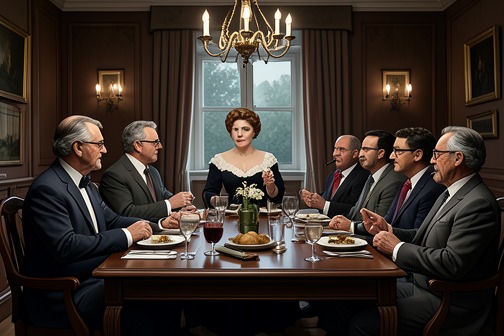
The [First-person narrator](entity:character-recall-character-36db7d2b7eb1) travels by the local railway to La Raspelière for a dinner at [Madame Verdurin](entity:character-recall-character-madame-verdurin-16c9ab4d4462)’s. The guests include [Princess Sherbatoff](entity:character-recall-character-princess-sherbatoff-abfaabdbb7c0), [Brichot](entity:character-recall-character-brichot-1f748a13cf0b), [Cottard](entity:character-recall-character-cottard-3da2a3d9d828), [Ski](entity:character-recall-character-ski-08f59576275c), [Saniette](entity:character-recall-character-saniette-a6cca98c95fa), the Cambremers, [Morel](entity:character-recall-character-morel-91ba3fc096bc), and [Palamède de Charlus](entity:character-recall-character-palam-de-de-charlus-a65d1fbf89c6).
The dinner exposes the little circle’s increasingly confident claim to cultural distinction. Brichot offers elaborate etymologies, the Cambremers display their social and artistic prejudices, and Madame Verdurin’s hospitality coexists with her need to control who belongs.
Before dinner at La Raspelière
Morel Conceals His Father’s Position
[Morel](entity:character-recall-character-morel-91ba3fc096bc) asks the [First-person narrator](entity:character-recall-character-36db7d2b7eb1) to conceal that his father was a valet in the narrator’s great-uncle’s household, and to describe him instead as an estate steward. [The narrator](entity:character-recall-character-the-narrator-4884f56df089) reluctantly repeats the cover story to [Madame Verdurin](entity:character-recall-character-madame-verdurin-16c9ab4d4462).
Once his request is granted, Morel’s exaggerated respect disappears and he treats the narrator with coldness. The episode reveals his willingness to use others for advantage and anticipates the mixture of charm, ambition, and ingratitude that shapes his relationship with Charlus.
During the La Raspelière dinner
Charlus Claims His Rank
When the Cambremers’ arrangements place [Palamède de Charlus](entity:character-recall-character-palam-de-de-charlus-a65d1fbf89c6) below the Marquis, the Baron explains that his family has a far higher rank than the title of Baron suggests. He lists princely titles and historical precedence, leaving [M. Verdurin](entity:character-recall-character-m-verdurin-97491c80421b) surprised by the claims.
Charlus’s pride collides with the Verdurins’ habit of treating social rank as irrelevant. The episode shows how readily the little circle borrows aristocratic prestige even as it mocks the conventions that confer it.
During the La Raspelière dinner
Saniette Is Humiliated
[M. Verdurin](entity:character-recall-character-m-verdurin-97491c80421b) publicly mocks [Saniette](entity:character-recall-character-saniette-a6cca98c95fa)’s speech and his account of having attended a play. The guests laugh, while [Madame Verdurin](entity:character-recall-character-madame-verdurin-16c9ab4d4462) pretends to defend him and then joins in the ridicule.
Saniette’s vulnerability makes him a regular target of the couple’s cruelty. [The narrator](entity:character-recall-character-the-narrator-4884f56df089) recognizes that the little circle’s apparent warmth rests on exclusion and that its members imitate the powerful rather than risk becoming targets themselves.
Later that evening at La Raspelière
Charlus’s Musical Accompaniment
[Palamède de Charlus](entity:character-recall-character-palam-de-de-charlus-a65d1fbf89c6) accompanies [Morel](entity:character-recall-character-morel-91ba3fc096bc) in a passage from Fauré’s violin sonata, revealing a musical sensitivity that the narrator had not suspected. Morel has virtuosity and tone; Charlus supplies the style and interpretive depth that he lacks.
The performance complicates the Baron’s social persona. His artistic gifts, like his sexual life, have remained partly concealed, and the narrator sees how an inner imbalance can coexist with cultivated talent.
After the first La Raspelière dinner
The Cambremers’ Social Calculations
The Cambremers attempt to reconcile their desire for fashionable connections with their contempt for [Madame Verdurin](entity:character-recall-character-madame-verdurin-16c9ab4d4462) and her circle. They invite some members of the little group but exclude others, hoping to entertain socially impressive guests while protecting their own standing.
[Morel](entity:character-recall-character-morel-91ba3fc096bc) interprets [Palamède de Charlus](entity:character-recall-character-palam-de-de-charlus-a65d1fbf89c6)’s hierarchy too literally and declines a Cambremer invitation to demonstrate his supposed superiority. His act delights the Baron but angers the hosts, widening the rift between the Cambremers and the Verdurins.
Later in the Balbec season
The Chauffeur Replaces the Coachman
[Morel](entity:character-recall-character-morel-91ba3fc096bc) manipulates the household servants into believing that the Verdurins’ coachman is dangerous. The coachman, already beset by missing equipment and false accusations, leaves, and the [Balbec](entity:location-recall-location-balbec-d6d66fecba26) chauffeur takes his place.
The [First-person narrator](entity:character-recall-character-36db7d2b7eb1) initially accepts the chauffeur’s account that the change was innocent. He does not yet know that Morel engineered the dismissal, a deception that will later have consequences for the narrator’s own dependence on the chauffeur.
During the Balbec season, before the narrator leaves
The First Airplane
While riding alone through the countryside, the [First-person narrator](entity:character-recall-character-36db7d2b7eb1) sees an airplane cross the sky. Its appearance overwhelms him because it seems to open routes into space and life beyond the familiar paths that have constrained him.
The sight briefly revives the possibility of escape and transformation. It contrasts with the increasingly repetitive pattern of his life with [Albertine](entity:character-recall-character-albertine-6f859e563b53) and the social routine of the coast.
Later in the Balbec season
Charlus’s Imagined Duel
After [Morel](entity:character-recall-character-morel-91ba3fc096bc) refuses to spend an evening with him, [Palamède de Charlus](entity:character-recall-character-palam-de-de-charlus-a65d1fbf89c6) invents an insult and threatens to fight a duel. He sends the [First-person narrator](entity:character-recall-character-36db7d2b7eb1) to deliver a letter intended to draw Morel back to him.
Morel initially refuses even to open the letter, then learns of the supposed duel and returns in fear of scandal. Charlus’s threat is a desperate means of keeping Morel close, while Morel’s concerns are less about the Baron’s safety than about his own reputation and prospects.
Later in the Balbec season
The Maineville Brothel
[Morel](entity:character-recall-character-morel-91ba3fc096bc) uses the chauffeur to meet the Prince de Guermantes at the luxurious brothel in Maineville, while [Palamède de Charlus](entity:character-recall-character-palam-de-de-charlus-a65d1fbf89c6) arranges to watch from a concealed room. Charlus expects to discover whether Morel is unfaithful to him.
The establishment’s staff learn of the plan and hide the Prince, leaving Morel terrified and unable to respond naturally while Charlus watches. The Prince later tries to arrange another meeting, but Morel sees Charlus’s photograph in the villa and flees, believing the Baron has laid a trap.
Toward the end of the summer season
The Comte de Crécy’s Visits
The [First-person narrator](entity:character-recall-character-36db7d2b7eb1) invites Pierre de Verjus, Comte de Crécy, to dine at the Grand Hotel. The Comte shares his knowledge of aristocratic families and takes evident pleasure in conversations about pedigree and social history.
His visits become one of the narrator’s diversions when he is not with [Albertine](entity:character-recall-character-albertine-6f859e563b53). The contrast between the Comte’s old aristocratic identity and his diminished circumstances reveals how social rank survives in memory even after wealth and position have disappeared.
As autumn approaches
The Last Season at Balbec
The [First-person narrator](entity:character-recall-character-36db7d2b7eb1)’s daily excursions with [Albertine](entity:character-recall-character-albertine-6f859e563b53) continue, while M. de Charlus becomes a familiar presence among the Verdurins. The changing weather and increasingly dark journeys to La Raspelière alter the atmosphere of the coast, while familiar stations and acquaintances gradually lose their former mystery.
[The narrator](entity:character-recall-character-the-narrator-4884f56df089)’s life with Albertine gives him both relief and new anxieties. He increasingly understands that the social world and the landscape have become ordinary through habit, and he begins to feel that marriage would be madness, though he remains emotionally bound to her.
Late in the Balbec season
Brichot’s Fall from Favor
[Brichot](entity:character-recall-character-brichot-1f748a13cf0b)’s attachment to the Verdurins’ circle grows even as [Madame Verdurin](entity:character-recall-character-madame-verdurin-16c9ab4d4462) becomes tired of his unquestioning loyalty. His affection for [Mme de Cambremer](entity:character-recall-character-mme-de-cambremer-4a787c1fe9e6) prompts her to intervene, warning him that he is a laughing-stock and that the Marquise does not care for him.
Brichot is devastated and his already failing eyesight worsens. The episode reveals the emotional cruelty behind the salon’s rules of belonging and shows that the faithful may be discarded even after years of service.
The evening the narrator decides to leave Balbec
Albertine Names Mlle Vinteuil
As the [First-person narrator](entity:character-recall-character-36db7d2b7eb1) and [Albertine](entity:character-recall-character-albertine-6f859e563b53) return from a dinner at La Raspelière, he says that he wants to ask [Madame Verdurin](entity:character-recall-character-madame-verdurin-16c9ab4d4462) about the music of [Vinteuil](entity:character-recall-character-vinteuil-879e4be5d6a9). Albertine responds that she knows Vinteuil’s daughter and her close friend, describing the woman as a beloved companion from her past.
The disclosure confirms the narrator’s worst fear: Albertine has an intimate connection to the very woman whose sexual history he witnessed at [Montjouvain](entity:location-recall-location-05e13cf72f46). The revelation turns an old memory into an immediate crisis and makes him reconsider his plan to leave her.
The night of the revelation
Albertine Stays at Balbec
The [First-person narrator](entity:character-recall-character-36db7d2b7eb1) asks [Albertine](entity:character-recall-character-albertine-6f859e563b53) to stay at [Balbec](entity:location-recall-location-balbec-d6d66fecba26), and she agrees. He spends the night alone, grieving over what he has learned and watching dawn arrive over the sea.
His memories of [Montjouvain](entity:location-recall-location-05e13cf72f46) now appear to explain Albertine’s past and present. He understands that his earlier jealousy was only a pale anticipation of the deeper anguish now consuming him, and he decides that he cannot let her leave for [Trieste](entity:location-recall-location-d475e87ba5ac).
The morning after Albertine stays
The Mother’s Departure
The [First-person narrator](entity:character-recall-character-36db7d2b7eb1)’s mother prepares to leave for Combray to visit her dying aunt. He tells her that he has changed his mind and now intends to marry [Albertine](entity:character-recall-character-albertine-6f859e563b53), reversing the promise he had made the previous day that he would not.
The decision arises from jealousy and fear rather than confidence in a lasting love. By choosing to bind Albertine to him, the narrator hopes to prevent the life she might lead beyond his sight, setting the next stage of their relationship in motion.